[This story from MedCity News is about how surgeons are using presence-evoking immersive media to improve patient outcomes, along with other benefits. The story highlights two important points that apply across many presence applications: the value of providing users with a spectrum of presence-evoking technologies – in this case from images and video to 3D models and virtual reality, and the importance of not just inventing better technologies but putting them into “regular, practical, and effective use” by developing collaborative systems that make the technologies widely available and train people in how to use them effectively. –Matthew]
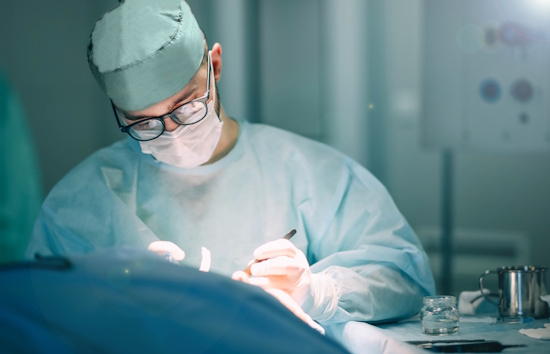
[Image: Credit: Mikalai Daevich, Getty Images]
The Pulse of Innovation: How 3D Models Can Prepare Surgeons for the Operating Room
Today, 3D modeling and printing technology can make a dramatic impact — even shortening some operations by 30-90 minutes. Looking ahead, that reduction will only grow as the technology is further integrated and becomes more advanced.
By Justin Ryan
August 21, 2026
In the operating room, even the smallest bit of information can make an incredible impact. While surgeons prepare as much as they can before a procedure, once their tools are sterilized and they begin the operation, they must make real-time decisions with the information at hand.
These days, the operating room at some facilities looks a little different. One surgeon might refer to an exact, sterilized printed model of the heart they’re operating on during surgery. Another might look at a display to see a digital rendering (or 3D reconstruction) of their patient’s airway. These interactions are happening outside of the operating room too, as surgeons don virtual reality (VR) headsets to “step into” their patients’ brain and surrounding blood vessels in a virtual world before surgery.
This revolution of immersive media is made possible through the innovation of 3D computer models and 3D prints to help surgeons stay prepared from pre-op to the operating table and beyond. Since the introduction of 3D technology to the healthcare space nearly 30 years ago, specialists have refined a process designed to work in tandem with physicians as they solve some of the world’s most complex cases.
How to build a 3D model
It all starts with the patient. In some cases — particularly at specialty hospitals and pediatric facilities — a patient’s unconventional anatomy can introduce an added layer of complexity when a surgeon is mapping out an operation. This is where 3D modeling comes in.
Using the patient’s medical images, such as computed tomography (CT) and magnetic resonance imaging (MRI) scans, 3D modeling specialists can develop a 3D computer model through a process called segmentation and reconstruction. Well-equipped specialists can turn any body part — from a tiny bone in the foot to the fluid filled ventricles in the brain — into a computer model within minutes or into a 3D print within a day. Once the surgeon has their model or print in hand, they can study their patient’s unique anatomical features up close and make bespoke decisions that best benefit that patient.
Specialists can also create guides and templates designed to fit a 3D model of a patient’s specific anatomy, equipped with depth markers, which are used by surgeons to tailor the application of their tools before surgery to ensure precision. Surgeons can even use guides to pre-bend and manipulate tools prior to entering the operating room, which reduces the need for intraoperative decision-making and on-the-fly alterations.
Supporting physicians and patients
3D printing technologies are often brought to surgeons by medical device companies, or 3D initiatives might be championed by sole physician-enthusiasts who work to integrate 3D modeling processes into their own practices. While this can result in strong outcomes for that physician, the scale is limited. It may mean one department will have incredible 3D models to review prior to surgery while another department will lack access to the emerging technology.
Ideally, hospitals would have an in-house 3D printing service line to provide support across many departments. This type of model allows 3D printing specialists to work closely with physicians, facilitating ongoing, open communication and collaboration that leads to continuous improvement. Building a strong relationship allows for the creation of solutions that are customized to fit the doctor’s preferred technology medium. For example, some doctors may prefer a simple video of the 3D reconstruction, while others would rather manipulate native 3D information like a video game.
Outside of surgical preparation, 3D models can help doctors better communicate with families. For example, a language barrier between a surgeon and a patient’s family might make it difficult for the surgeon to communicate about the child’s unique anatomy and plans for the operation. The surgeon could obtain a color-coded model of the patient’s anatomy that allows them to explain what would happen during the surgery.
The future of 3D modeling in healthcare
Today, 3D modeling and printing technology can make a dramatic impact — even shortening some operations by 30-90 minutes. Looking ahead, that reduction will only grow as the technology is further integrated and becomes more advanced. At the end of the day, simplified, shortened procedures not only help surgeons, but result in both cost savings and less patient risk — making the benefits of 3D modeling in healthcare clear.
While 3D modeling in healthcare isn’t new, like many technologies, it can be difficult to put into regular, practical, and effective use. Its future won’t just be defined by newer, emerging technologies, but by how well physicians and healthcare systems adapt to new processes. With integrated teams and well-defined systems, hospitals can create environments that better support physicians, so that we can better support our patients.
Leave a Reply