[If you are or will be in the San Francisco Bay Area before the end of March 2027, you might want to visit the Computer History Museum in Mountain View for an exhibit about the evolution of presence-evoking technologies. Details are in this blog post from Meta, one of the sponsors. Excerpts of news coverage from KION and the Los Altos Town Crier follow below. More information is available from the Museum’s Exhibit page and a press release via GlobeNewswire. –Matthew]
A New Museum Exhibition Shows The Evolution of Interactive Wearable Technology
October 21, 2026
Interactive extended reality technology is everywhere in popular culture today, so it would be natural to assume it emerged in the last decade or so. But while AI glasses and virtual and augmented reality headsets have only recently become mass-market commercial products, the DNA of natural, personal, and seamless computing hardware dates back to the 1960s.
That rich and exciting heritage is now on display at the Computer History Museum (CHM) in Mountain View, Calif. Meta is proud to be a founding sponsor, along with Google and Applied Materials, of CHM’s Extended Reality: Visions of the Future exhibition, running now through March 28, 2027. The exhibit builds on our Project Aria collaboration with CHM to develop an AI-powered museum tour experience that makes museums more accessible to everyone.
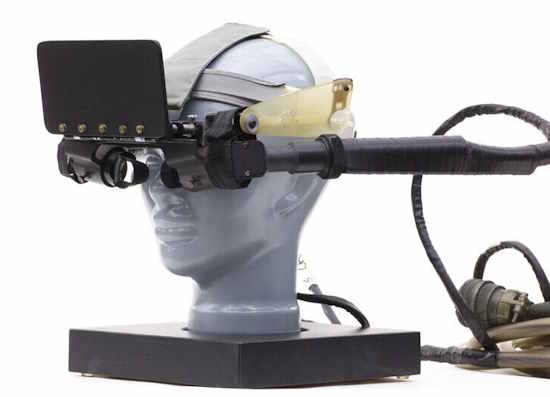
When you visit this 800-square-foot immersive experience, you’ll explore XR’s nearly 60 year history that started with the Sutherland Head-Mounted Three-Dimensional Display in 1968 and continues through today’s state-of-the-art AI glasses. All told, the exhibit features dozens of production and prototype devices including famous products like the Oculus Rift CV1, Meta’s Project Aria research glasses, Google Glass, Magic Leap, Microsoft Hololens, and many, many more.
Getting Hands-On With History
The exhibition is about more than celebrating the many essential developments that led to today’s XR devices. It’s also about showing the step-by-step evolution of wearable technology from massive and expensive hardware to today’s slim and light wearables designed for everyday living, learning, and creating.
We’re excited to help manifest that vision and for visitors to get hands-on with two of our latest wearable devices during the upcoming demo days on October 24, November 7, November 21, December 19, and January 2, 2027. During each of those three-hour sessions (from 1pm to 4pm PT each demo day), Meta product experience specialists will guide visitors 13 years of age and older through a special museum mode experience on Meta Glasses and an origami-folding experience on Meta Ray-Ban Display.
After borrowing a pair of Meta Glasses, visitors can explore CHM in a new way with museum mode, an audio-first experience that combines expert-curated storytelling with conversational AI. CHM is the first museum partner for museum mode.
Here’s how it works:
- Pick up your Meta Glasses from an on-site specialist when you enter the exhibition.
- Examine any featured object’s placard, and your Meta Glasses will recognize it and automatically play its story, narrated by CHM’s expert curators
- Want to learn more? Press the glasses’ temple to ask a follow up question. Meta AI responds through the glasses’ open-ear speakers so you can keep exploring hands-free.
Curator narration and Meta AI use distinct voices, so you always know whether you’re hearing CHM’s curated story or an AI-generated response.
We’re committed to building technology that opens doors for everyone, so museum mode leverages our ongoing accessibility research with blind and low-vision communities to make exploring the CHM collection fully independent and hands-free.
For blind and low-vision visitors, there are no screens to read, information to enter, or signs to locate. They simply face an object, hear its history in rich detail, and ask Meta AI any follow-up questions that might help enrich their personal understanding of each object in the collection.
The history of extended reality demonstrates how today’s wearable technology is laying the foundation for the next era of computing. To understand where it’s going it’s important to know where it came from. We can’t wait to hear what you think of the exhibition.
—
[From KION]
Computer History Museum marks 60 years with extended reality exhibition
By Mary Lee, KPIX
November 9, 2026
[snip]
The new exhibit, “Extended Reality: Visions of the Future,” takes visitors on a journey through the evolution of technology, blending the digital world with our own. It features augmented and virtual reality technology over several decades, guided by industry pioneers like Bernard Kress, director of optical engineering for extended reality at Google.
[snip]
Kress said the technology is finally hitting a major turning point.
“We think that for the first time in 20 years, this is really the year where smart glasses or AI glasses will take off,” said Kress.
He said the technology has matured, and artificial intelligence is the missing piece that makes these glasses useful in everyday life.
“Well, today, a lot of people are using AI already in their daily lives, but it’s on their phone,” said Kress. “It’s on the tablet or it’s on a computer. Imagine the same help on your face with an assistant that you don’t need to take out of your pocket-an assistant that sees what you’re seeing, hears what you’re hearing, so it’s so much more powerful.”
[snip to end]
—
[From the Los Altos Town Crier]
Computer History Museum launches new exhibit focused on extended reality
By Ava Acharya, Town Crier Staff Writer
September 25, 2026; updated September 29, 2026
As popular technology continues to evolve, the solutions to relevant and noteworthy issues may lie in understanding the past.
Mountain View’s Computer History Museum strives to bring the evolution of wearable tech to life through its upcoming exhibit, “Extended Reality: Visions of the Future.”
“It’s sort of the perfect chance to look back and look forward,” said Marc Weber, exhibit curator and founder of the museum’s Internet History Program. “By understanding the past, it’ll help you invent the future … there’s something to be learned.”
[snip]
The display combines the museum’s collection with pieces belonging to Next Computing Frontier co-founders Bernard Kress and Rachel Tan. This tech will be showcased alongside a comprehensive timeline spanning roughly 60 years of the XR’s continued evolution.
“These 100-plus headsets show all the work people have put in for 70 years on making this vision come true,” Weber said. “(There is) an amazing variety of incredibly clever solutions to all sorts of problems, because it’s not easy.”
The exhibit will encourage people to learn how XR tech developed, while considering what the future may hold, Weber said.
The exhibit’s timeline starts with Ivan Sutherland’s head-mounted 3D display, commonly referred to as the “Sword of Damocles,” which was created in the late 1960s and is widely regarded as the earliest head-mounted augmented reality display. It will also feature more recent iterations of this technology, such as the Meta smart glasses and Apple Vision Pro.
“You have to fool the eye and the ear to make you think that you’re in another place, or that your actual reality around you has things added that are not in fact real,” Weber said. “And the big question – are we there yet?”
Specifically, Weber noted current concerns surrounding both the implementation of artificial intelligence in modern products, as well as popular concerns surrounding privacy.
Understanding the core goals and mechanisms behind early headsets offers valuable insight into how this technology can best be used to serve the general public, Weber said.
The Computer History Museum will host several interactive demonstrations, spanning from October to January, to give visitors more tangible experience with these pieces of technology.
As this technology becomes incorporated into everyday life, understanding where it came from holds great importance, Weber said.
“So many people will realize that something they thought was brand new has this long history, and it’s often like an iceberg,” Weber said. “There’s an interesting lineage historically.”
Leave a Reply