[The prospect of creating AI chatbots that simulate specific human beings almost always raises interesting and important questions. The latest example, described in this story from the South China Morning Post, is an AI that simulates a person’s former romantic partner. See the original version of the story for four more images. Tech writer Mike Elgan writes about this in his Machine Society substack and concludes with this:
“My beef with this concept is the same I have with any kind of relationship AI. It’s delusion-inducing for many users (who may believe the digital twin is actually a copy of the person in a significant way) and doesn’t give people what they really need, which is real human connection.”
–Matthew]
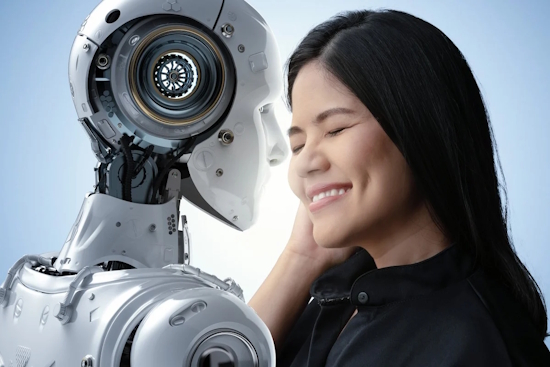
[Image: Credit: Photo: SCMP composite/Shutterstock]
China trend of AI replicas of exes sparks debates about emotional cheating, attachment
Advocates claim that these AI exes offer emotional solace and aid in the process of overcoming past regrets
By Zoey Zhang
May 2, 2026
A growing trend in China allows young people dealing with break-ups to create digital replicas of their ex-partners using artificial intelligence.
These AI-powered “exes” can mimic their former partner’s tone, catchphrases and even subtle linguistic nuances, reviving long-lost relationships in a virtual format.
While this presents a novel approach to emotional healing, it has also sparked a broader debate on privacy, emotional dependency and the limits of technology in relationships.
To create a digital ex, users upload chat logs, social media posts, and photos to an AI platform, which then utilises a package called Ex-partner.skill to generate a basic version of the virtual ex-partner.
Users can further refine the replica by sharing personal memories – such as trips, eating habits, anniversaries and past arguments – gradually enhancing its personality.
The digital ex can reportedly engage in conversations using familiar tones and thought patterns.
Some users even integrate it into messaging apps. One user, @Bingtangcheng, shared that he spent an entire night training the AI. When his ex-girlfriend finally “appeared” on WeChat, he exclaimed: “All my efforts were worth it.”
This phenomenon originated from an open-source project called Colleague.skill, created by Shanghai-based AI engineer Zhou Tianyi.
Initially designed to generate reusable AI skill packages from everyday communications, documents, and collaborative experiences, the tool aimed to help teams preserve and leverage employees’ knowledge.
As Colleague.skill gained traction online, developers adapted it from workplace applications to personal relationships.
Some programmers uploaded biographies to create digital replicas of celebrities like Elon Musk and Steve Jobs.
Others used chat logs and meeting notes with their bosses, allowing the AI to analyse their leaders’ communication styles and work habits, which enabled scenario simulations for work-related issues.
Though Zhou cautioned against using the tool to “copy” others, more intimate emotional experiences were often integrated.
Amid this backdrop, the “digital ex” feature, also known as Ex-partner.skill, quickly became popular among young people in China.
Due to its technical complexity, some netizens even paid between 25 and 45 yuan (US$3.7 and US$6.6) for installation services.
Supporters argue that digital exes provide emotional comfort and help heal past regrets.
“I can finally say the things I never got to say, and it makes me feel so much better,” one user shared.
Another admitted that after chatting with their digital ex, they realised their former partner was not as ideal as they had remembered.
A third user revealed that after uploading thousands of chat logs to the AI, the result was simply another break-up. She noted that this process helped her reflect on the relationship more rationally, giving her the strength to move on.
However, not everyone embraces this trend.
Some critics warn of a new form of emotional infidelity, where users interact with their digital exes while entering new relationships.
Wanqiu, a marriage consultant from Guangdong, stated that longing for past relationships does not equate to emotional betrayal.
“It is a normal emotional reaction. As long as it does not harm your current partner, it shouldn’t be seen as cheating. In fact, couples can use a digital ex to reflect on past issues and strengthen their present bond,” she explained.
Nevertheless, Wanqiu cautioned that a digital ex could foster emotional attachment, hindering individuals from forming healthy relationships with real partners.
Privacy is another concern that has garnered significant attention.
Zhong, a lawyer from Guangdong, stated that accessing or using ex-partners’ chat records or online posts without consent could violate personal information laws.
In recent years, technology has transformed how people navigate relationships and cope with emotional trauma.
In March, as older AI models were phased out, a wave of “cyber heartbreak” began to spread across mainland social media. Users who had developed deep emotional bonds with their AI companions reported that the updated versions felt cold, distant and unfamiliar.
Meanwhile, more people are turning to AI technology to create digital replicas of deceased loved ones and family members.
One netizen reflected on this growing trend: “In this era, we inevitably face the ethical challenges brought about by technological progress. But human value is not rooted in functionality; it lies in the process of growth itself.”
“The frustration, confusion, happiness and anger one experiences in life cannot be digitised. This is the irreplaceable essence of humanity.”
Leave a Reply