[The potential impacts of presence, especially in the context of health care, require a serious mindset and user-centric, policy-based practices. That’s the message in this essay from Healthcare Today, where the original version includes two more images. For more about the author, see a story in CIO Times. –Matthew]
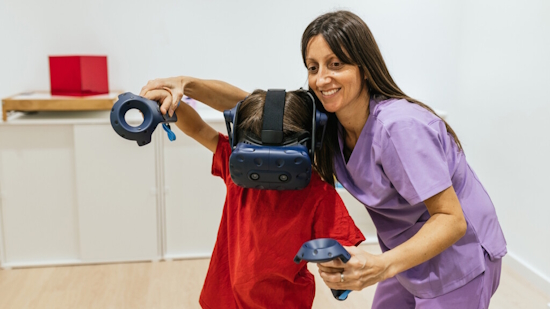
Comment: The ethics of immersion VR therapy
Nargiz Noimann, founder of X-Technology, writes about the patient safety and liability gap in virtual reality therapy.
By Nargiz Noimann
January 27, 2026
Immersive virtual reality (VR) therapy is entering care pathways faster than the governance around it. I do not say that to slow innovation down. I say it because immersion changes the risk profile of digital health in a way many teams still underestimate.
A standard app delivers content. Immersion delivers an environment. The nervous system does not treat that difference as cosmetic. It responds as if it is inside a space, not looking at a screen. That is why immersive interventions can feel so effective. It is also why the usual shortcuts in digital health stop being safe once you scale.
When a patient reports discomfort after an app, it often gets framed as user experience. When a patient reports overload after immersion, the questions become clinical immediately. Who screened suitability? Who defined exposure limits? Who supervised? Who documented adverse effects? Who decided the session should continue?
Immersion turns digital delivery into accountability.
A paper last year on neuropsychological safety in virtual therapeutic environments makes a point that private providers, outpatient settings, and any service building VR into a pathway should take seriously. Early wins in pilots are common, but real-world variability arrives fast. panic activation, nausea that does not resolve quickly, dissociation, symptom rebound, or simple intolerance to sensory load are not rare edge cases. They are predictable when exposure rules are undefined.
This is the part that gets missed in the rush to deploy. Undefined exposure rules do not stay neutral. they become incidents, complaints, and reputational damage. They also become legal vulnerability, not because providers are careless, but because they cannot demonstrate that they operated within a defensible standard of care.
The governance gap shows up clearly in private settings because adoption can be fast, and supervision models vary. Another paper on VR in private psychological practice maps the same issue from a professional risk angle. When a headset becomes part of routine delivery, the soft parts of practice become hard requirements. Screening, dosing logic, supervision, and adverse event capture are no longer nice to have. They become the difference between an intervention that can be defended and an experience that can only be explained after something goes wrong.
Responsible governance
So what does responsible governance look like when a provider wants to use immersive therapy in a way that is credible, safe and sustainable?
It starts with a mindset shift. session length is dose, not scheduling. In immersive formats, dose is not only time. It is intensity, sensory load, interactivity, and the degree of presence the environment creates. If a provider cannot define dose ranges and clear stop criteria, they cannot honestly claim they are delivering a controlled intervention.
Screening also has to be concrete. Providers need explicit exclusion criteria and escalation rules for seizure risk, significant vestibular sensitivity, acute psychosis, and high dissociation vulnerability. This is not about treating patients as fragile. It is about matching exposure to physiology. In immersion, the same stimulus can regulate one person and destabilise another.
Supervision must be defined just as clearly. Immersion can look calm on the outside while the patient is shutting down internally. A trained observer is not there to police. They are there to recognise overload early and to end the session before the nervous system crosses a threshold that is harder to reverse. That training should include what to look for, what to do, and how to document it.
Then there is adverse event capture. Too many programmes treat discomfort as noise. In a regulated care culture, it is a signal. If you cannot record and categorise nausea, panic activation, dissociative responses, symptom rebound, or delayed agitation, you cannot improve protocols and you cannot demonstrate duty of care. This is also where complaints become sharper, because patients often describe not only the experience but the feeling that nobody expected a negative response.
Informed consent has to reflect reality. A signature is not enough. Patients need a clear explanation of what immersion can trigger, what sensations can occur, what signs indicate overload, and what support exists if an effect lingers beyond the session. If an incident is reviewed later, the question will not be whether the technology is innovative. It will be whether the provider communicated risk responsibly and operated within defined boundaries.
Frameworks in place
The good news is that the UK already has frameworks that help teams think in the right way, even when immersive therapy sits between wellness and clinical service.
The National Institute for Health and Care Excellence (NICE) created an Evidence Standards Framework that links evidence expectations to function and risk. That logic matters for immersive interventions because it pushes providers and developers to align claims with the level of proof required, instead of jumping from early pilots to broad conclusions.
Regulatory clarity matters too. Medicines and Healthcare products Regulatory Agency (MHRA) guidance on software and AI as a medical device makes a point that many teams try to avoid until late. intended purpose and claims influence whether a product falls into regulated territory. Even when a specific immersive experience is not regulated as a medical device, provider governance still carries weight because it defines how the intervention is used, monitored, and documented.
I see 2026 as a turning point. Immersive therapy is moving from novelty to routine exposure. When something becomes routine, its failures stop being surprising. They become systemic. That is why governance cannot be treated as an afterthought or a later phase.
The field does not need to slow down. It needs to be professionalised. That means treating neuropsychological safety as a standard that is designed, documented, and audited, not a hope that patients will tolerate the experience.
If those rules are defined early, immersive therapy can earn trust, attract serious clinical partners, and integrate into pathways without the predictable cycle of early excitement followed by backlash after preventable incidents. If they are not defined, the standard will be written after the fact by complaints, lawyers, and reputational damage.
Leave a Reply